Complete Guide to Carl Jung and Shadow Work Integration: The Ultimate Self-Knowledge Map
Complete guide to Carl Jung's shadow work: what it is, its 3 types (personal, collective, golden), how to identify it, and how to start integrating it.
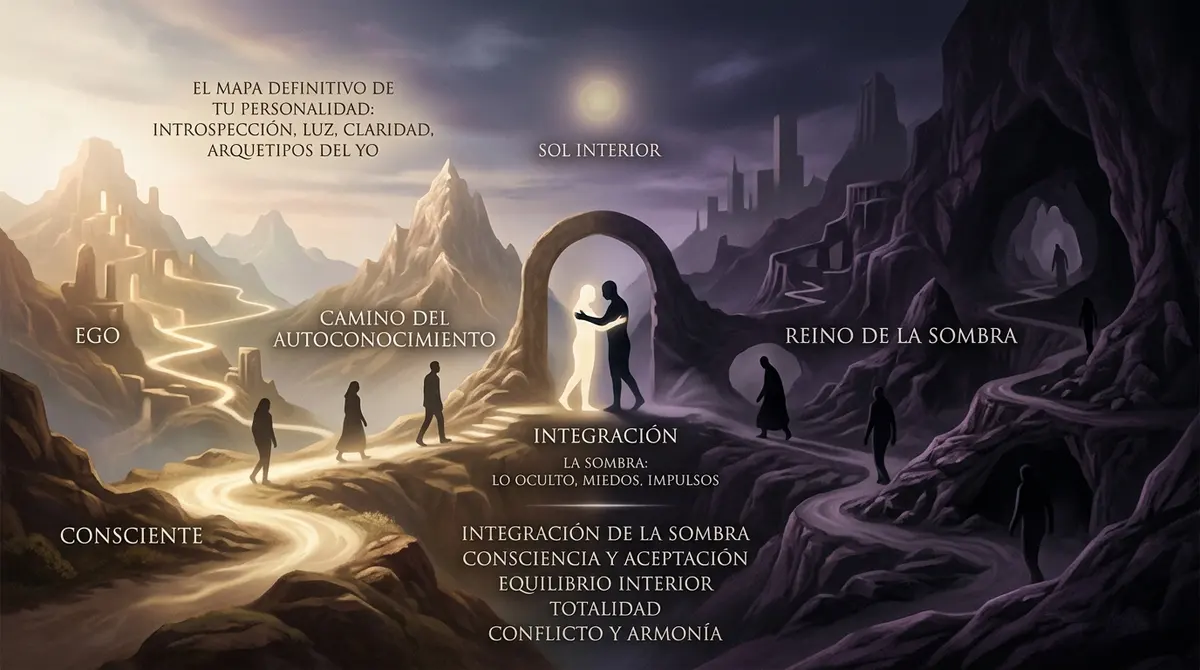
1. What the shadow is, per Carl Jung
Carl Jung defined the shadow as the part of the psyche made up of traits, impulses, and desires the conscious self rejects because they became unacceptable to the family or social environment. It doesn't disappear from being repressed: it shows up through projection — attributing to others, with disproportionate emotional intensity, what we don't recognize in ourselves.
2. The three types of shadow
The personal shadow holds repressed individual traits (anger, ambition, sexuality). The collective shadow operates at group level, projected onto "the other" in cultural or social conflicts. The golden shadow includes positive qualities — creativity, leadership — we also repress if they once felt dangerous to show, recognized by intense admiration for that quality in others.
3. How it's actually worked on
The goal isn't to eliminate the shadow but to integrate it: identify it by observing disproportionate reactions and repeated patterns of envy or judgment, consciously withdraw the projection, dialogue with the rejected part, and find it a safe outlet instead of fully repressing it. It's an ongoing process, not an achievement reached once.
Shadow work starts where your reaction becomes disproportionate
A serious shadow work guide does not treat the shadow as a dark personality type or as a list of defects to eliminate. In Jungian language, the shadow is the material that the conscious identity has learned to reject: anger, ambition, vulnerability, desire, envy, dependence, power, tenderness, creativity, or any trait that once threatened belonging. The shadow is not automatically evil. It is often a mixture of unprocessed pain, forbidden strength, unmet need, and raw instinct that has been pushed outside the official story of who you believe you are.
The entry point is usually projection. Projection happens when something in another person carries more emotional charge than the situation seems to justify. You may feel intense irritation, fascination, envy, contempt, fear, or admiration. The other person may genuinely be behaving badly, but the shadow question is more precise: why does this particular trait hook me so strongly? What part of me is being defended, denied, or secretly longed for in this reaction?
Personal shadow, collective shadow, and golden shadow
The personal shadow contains the traits your own history made unacceptable. Someone raised to be agreeable may exile anger and later experience direct people as rude or dangerous. Someone praised only for achievement may exile rest, need, or play. The collective shadow operates at group level: communities, families, political groups, and cultures can project disowned fear or aggression onto an outside group. The golden shadow is subtler. It contains admired qualities you also possess in undeveloped form: confidence, beauty, intellectual authority, leadership, sensuality, creativity, or freedom.
Golden shadow work is important because not every intense reaction is rejection. Sometimes envy is a map. If you repeatedly admire people who take up space, speak clearly, create publicly, or set boundaries without apologizing, the task may not be to criticize them or copy them. It may be to ask which permission you never gave yourself. Integration means finding an ethical, embodied, realistic expression for the quality, not inflating into a fantasy version of it.
| Shadow signal | What to ask | Integration direction |
|---|---|---|
| Judgment | Which trait feels forbidden in me? | Name the rejected impulse without acting it out |
| Envy | What permission does this person seem to have? | Practice a small, ethical version of that permission |
| Over-identification | Where am I making this trait my whole identity? | Hold the quality with proportion and responsibility |
A safe way to investigate projection
Choose one recurring reaction, not your most painful material. Write the name of the trait you see in the other person: selfish, weak, arrogant, needy, fake, intense, cold, irresponsible, brilliant, magnetic. Then complete three sentences: "I learned that this trait was dangerous because...", "When I see it in others, I feel...", and "A healthier version of this trait could help me..." This exercise keeps the work concrete and prevents shadow language from becoming vague self-attack.
Good shadow work always includes containment. If the reaction is connected to trauma, abuse, severe shame, or intrusive memories, the safest step is professional support, not solitary digging. Integration is not exposure without limits. It is the gradual ability to recognize a disowned part, understand its function, and choose how it can participate in your life without controlling it from the background.
It also helps to distinguish shadow work from confession. You do not need to tell everyone every impulse you discover, nor do you need to dramatize an insight to make it real. Ethical integration asks for responsibility: if you notice aggression, you practice cleaner boundaries instead of hostility; if you notice desire for recognition, you create visible work instead of manipulating attention; if you notice dependence, you learn to ask directly instead of testing loyalty. The inner discovery becomes mature only when it changes how you relate to others.
From insight to integration
Integration has three movements. First, withdraw the projection enough to admit that the charge is partly yours. Second, listen for the need or capacity hidden inside the rejected trait. Anger may contain boundary energy; envy may contain direction; shame may guard a wish to belong; contempt may protect vulnerability. Third, translate the insight into behavior. If you discover anger, the practice may be one clean boundary. If you discover golden shadow around visibility, the practice may be publishing one honest piece of work. If you discover rejected need, the practice may be asking for help without disguising it as a joke.
The measure of progress is not becoming fascinated with your darkness. It is becoming less possessed by what you refuse to know. When shadow work is healthy, reactions become more proportionate, choices become less compulsive, and other people are allowed to be separate from your projections. You still feel, but you do not need to turn every feeling into a verdict.
- The shadow includes both repressed "negative" traits and unacknowledged positive qualities (golden shadow).
- The disproportionate intensity of a reaction toward someone else is the most reliable sign of projection.
- Integrating the shadow is an ongoing process reactivated at each new life stage, not a one-time event.
Discover your complete profile
If you want a personalized reading of the 12 dimensions + 3 annexes of your mind, start the self-knowledge test for free.
References and Bibliography
Selection of sources used as conceptual background for this article.