What is Nervous System Regulation (Polyvagal Theory): Definition, Background, and Key Ideas
Why do you sometimes freeze in an argument and can't get a single word out, while other times you react with an anger you don't even recognize as yours afterward? Stephen Porges's Polyvagal Theory offers a map for observing these responses: social connection, defensive mobilization, and collapse or disconnection. It is not a diagnosis, but it can help you read your state before trying to change it.
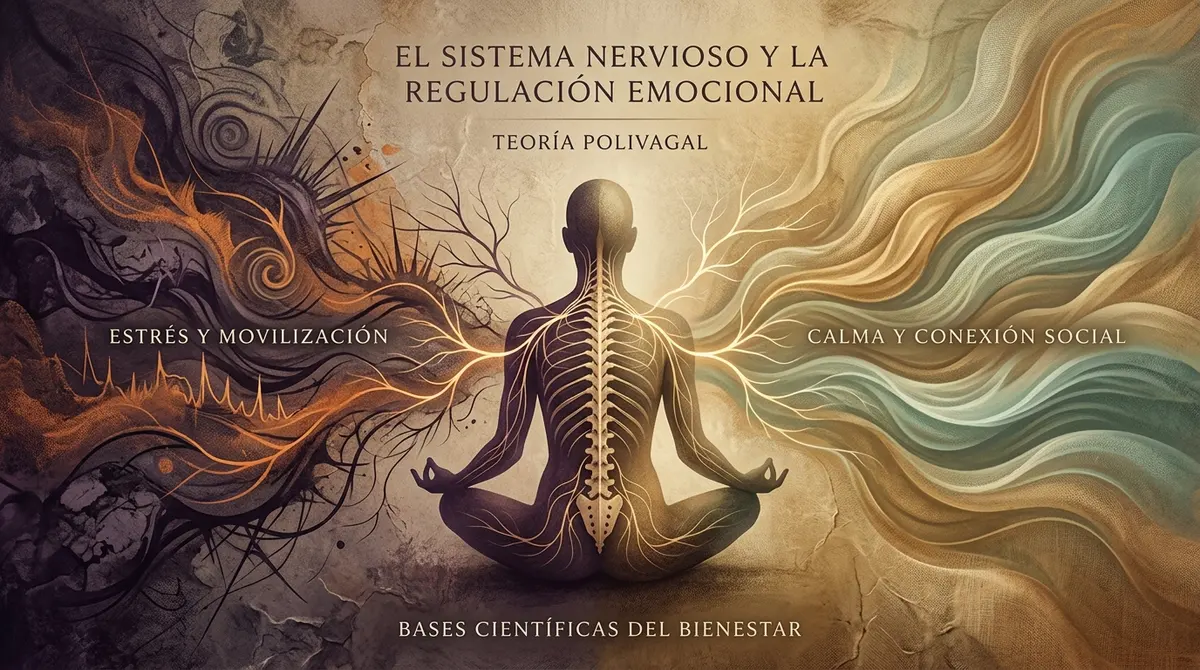
Theoretical Foundations and Research
Stephen Porges (1995) formulated polyvagal theory as an explanation of how the autonomic nervous system participates in safety, defense, and social connection. In this framework, neuroception describes a fast, not always conscious evaluation of safety or threat cues. The theory is widely used in somatic and trauma-informed therapy, though some of its physiological claims remain debated; here we use it as a self-observation map, not as a diagnostic test.
This article is part of our personality cluster. For a comprehensive, unified view of this pattern, we highly recommend reading our Complete Guide to Nervous System Regulation (Polyvagal Theory).
Methodology for Somatic Integration
Regulating the nervous system doesn't mean eliminating the reaction — it means recognizing it and offering it a safety cue. Three steps help:
- Name the activated state: identify whether you're in fight-or-flight mode (activation, irritability), collapse (shutdown, lethargy), or social safety (calm, connection), before trying to change it.
- Send a safety signal to the body before the mind: use tone of voice, slow breathing, or another person's warm eye contact to support a felt sense of safety, instead of trying to reason your way out first.
- Complete the activation cycle: if your body went into fight-or-flight, move physically — walk, shake out your arms — so the mobilized energy can discharge instead of staying trapped.
❓ Frequently Asked Questions
What is polyvagal theory of the nervous system? ▼
It is Stephen Porges's model for understanding emotional regulation through autonomic states such as social connection, defensive mobilization, and collapse/shutdown. It is useful as a clinical self-observation map, but it should not be treated as a closed physiological diagnosis.
How does the nervous system show up in daily life? ▼
It determines whether you freeze, react with irritability, or stay calm in the face of the same kind of stress, often before you can even consciously think about how to respond, since neuroception operates below the level of awareness.
Nervous system regulation is the capacity to return to safety
Nervous system regulation describes how your body detects threat, mobilizes energy, shuts down, connects, and returns to a workable baseline. It is not about being calm all the time. A healthy nervous system can feel anger, fear, grief, excitement, and stress without getting permanently trapped in emergency mode.
Polyvagal-informed language often names different states: social engagement, mobilization, and shutdown. In daily life, these states show up as voice tone, breath, digestion, attention, posture, eye contact, sleep, and the ability to connect. The key question is not "am I regulated forever?" but "can I notice my state and support a return to enough safety?"
Common states and useful responses
| State | Everyday signs | Support |
|---|---|---|
| Social engagement | Clearer voice, curiosity, contact, flexible thinking. | Protect it with pacing, boundaries, and connection. |
| Mobilization | Urgency, heat, defensiveness, racing thoughts, agitation. | Use movement, longer exhales, orienting, and reduced input. |
| Shutdown | Numbness, collapse, fog, disconnection, heavy fatigue. | Use warmth, gentle movement, light, hydration, and safe contact. |
| Mixed state | Tired but wired, frozen with inner panic, smiling while tense. | Go slowly; choose the least threatening regulation cue. |
How to use the concept without turning it into a label
A nervous system state is information, not an identity. Saying "I am dysregulated" can be useful if it leads to support, but limiting if it becomes another way to judge yourself. More precise language helps: "my body is mobilized," "I am near shutdown," or "I need less input before I decide." Precision turns the concept into a practical tool.
Regulation begins with noticing cues. Before a difficult conversation, check breath, jaw, shoulders, stomach, and speed of thought. During conflict, ask whether you are still able to hear new information. After stress, notice how long recovery takes. These details reveal your window of tolerance more clearly than an abstract idea of calm.
Small interventions matter. Looking around the room, feeling your feet, taking a slower exhale, drinking water, stepping outside, lowering your voice, naming one object, or contacting a safe person can shift state enough to regain choice. None of these replaces therapy or medical care when needed; they are daily supports for the body you already live in.
It also helps to track what expands or narrows your window over time. Sleep, food, predictable routines, movement, safe relationships, and honest boundaries usually widen capacity. Chronic conflict, overstimulation, isolation, perfectionism, and unresolved fear tend to narrow it. This makes regulation practical: you are not chasing permanent calm, you are learning which conditions make choice more available.
Progress looks like earlier recognition and kinder recovery. You still get activated, but you notice sooner. You still need boundaries, but you communicate them with more clarity. You still have shutdown days, but you stop treating them as moral failure. Regulation is the practice of helping your body return to enough safety to think, feel, connect, and choose.
- There are three nervous system states — connection, fight/flight, and collapse —, not just two, and recognizing which one you're in is the first step to regulating it.
- Neuroception acts before conscious thought does — that's why «reasoning» with a panic or freeze response rarely works right away.
- Safety cues (a calm voice, slow breathing, another person's presence) regulate the nervous system faster than any rational argument.
Nervous system regulation influences how you bond. For instance, sustained activation can feed relational hypervigilance, while shutdown or disconnection can support defensive distance. This does not map automatically onto a single attachment style, but it can help you explore how physiology and bonding influence each other. If you want to go deeper, take our free attachment style test online.
Take the next step in your self-knowledge journey
Knowing the theory is excellent, but assessing your baseline will provide a highly personalized reading. We encourage you to take the free Nervous System Regulation (Polyvagal Theory) test and receive your confidential report today.
References and Bibliography
Selection of sources used as conceptual background for this article.